 English
 Français
Why Formwork Is Essential in the Construction Industry: A Practical Guide
If you’ve spent even a single week on a commercial jobsite, you already know that concrete is completely helpless without something to hold it back. That is exactly what formwork is—the backbone of any concrete pour. It is the structural mold that keeps fresh concrete in place, preserving its intended dimensions until the mix gains enough compressive strength to stand on its own two feet.
But let’s be realistic: for a contractor or a project manager, formwork isn't just a container. It is a massive line item in your budget, a primary factor in your project timeline, and—if done wrong—the fastest way to cause a catastrophic site failure.
1. The Real Job of Formwork on a Busy Jobsite
Holding Back Hydrostatic Pressure: When wet concrete is discharged and vibrated, it behaves like a heavy liquid exerting massive lateral pressure. Cheap or poorly tied formwork will bulge, leak grout, or blow out entirely.
Fixing Human Errors Before the Pour: Formwork forces compliance with architectural blueprints. If your columns, beams, or walls aren't perfectly aligned in the shuttering stage, they never will be.
Cutting Down Post-Pour Labor Costs: The surface quality of your mold dictates your finish. A premium face material means you don't have to spend thousands of dollars later on grinding, plastering, and cosmetic patching.
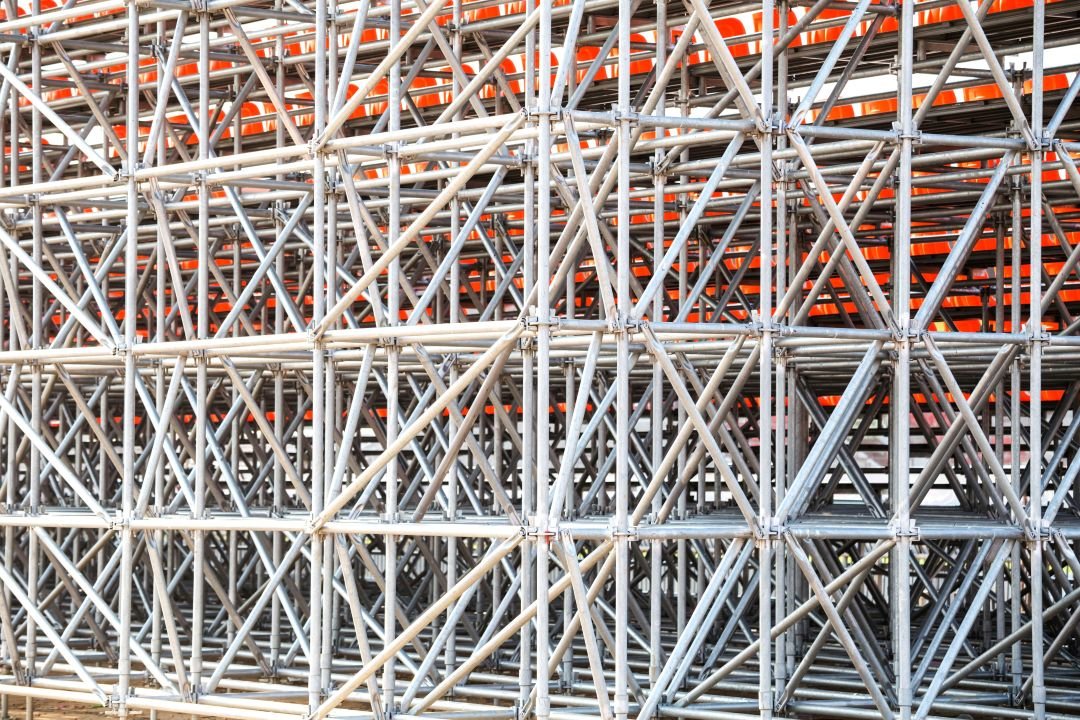
2. The Dollars and Cents: How Your Choice of System Drives ROI
A good formwork system needs to be tough, predictable, and reusable. In large-scale structural engineering, your asset turnover rate (how many times you can reuse the same panel) directly impacts your profit margins.
Let’s look at how the common materials stack up in the real world:
Steel Formwork: It’s heavy and requires a crane to move, but it gives you over 300 reuse cycles. If you are casting massive bridge piers, tunnels, or heavy civil infrastructure with zero room for error, steel is the gold standard.
Aluminum Formwork: Light enough for workers to handle manually without tying up the tower crane. You get 150 to 250 reuses, However, each project uses a customized template, which makes the price relatively high.
Plywood Formwork (The Traditional Choice): Cheap upfront and easy to cut into custom shapes on site, but you’ll be lucky to get 10 to 20 pours out of it before it warps and ends up in the dumpster.
3. Shuttering meets Shoring
Formwork doesn't float in mid-air. It relies heavily on an integrated matrix of temporary support structures beneath it. Depending on what you are casting, the engineering logic changes completely:
Slab & Plate Systems (Horizontal): This is where your formwork relies 100% on your shoring. To hold up the immense vertical dead load of a freshly poured floor slab, the mold panels must integrate perfectly with heavy-duty shoring frames, adjustable jack bases, and U-head jacks.
Wall & Column Systems (Vertical): Here, vertical load isn't the enemy—lateral pressure is. These systems use heavy-duty modular panels locked tight by high-tensile tie rods and walers to prevent the wall bases from splitting open during placement.
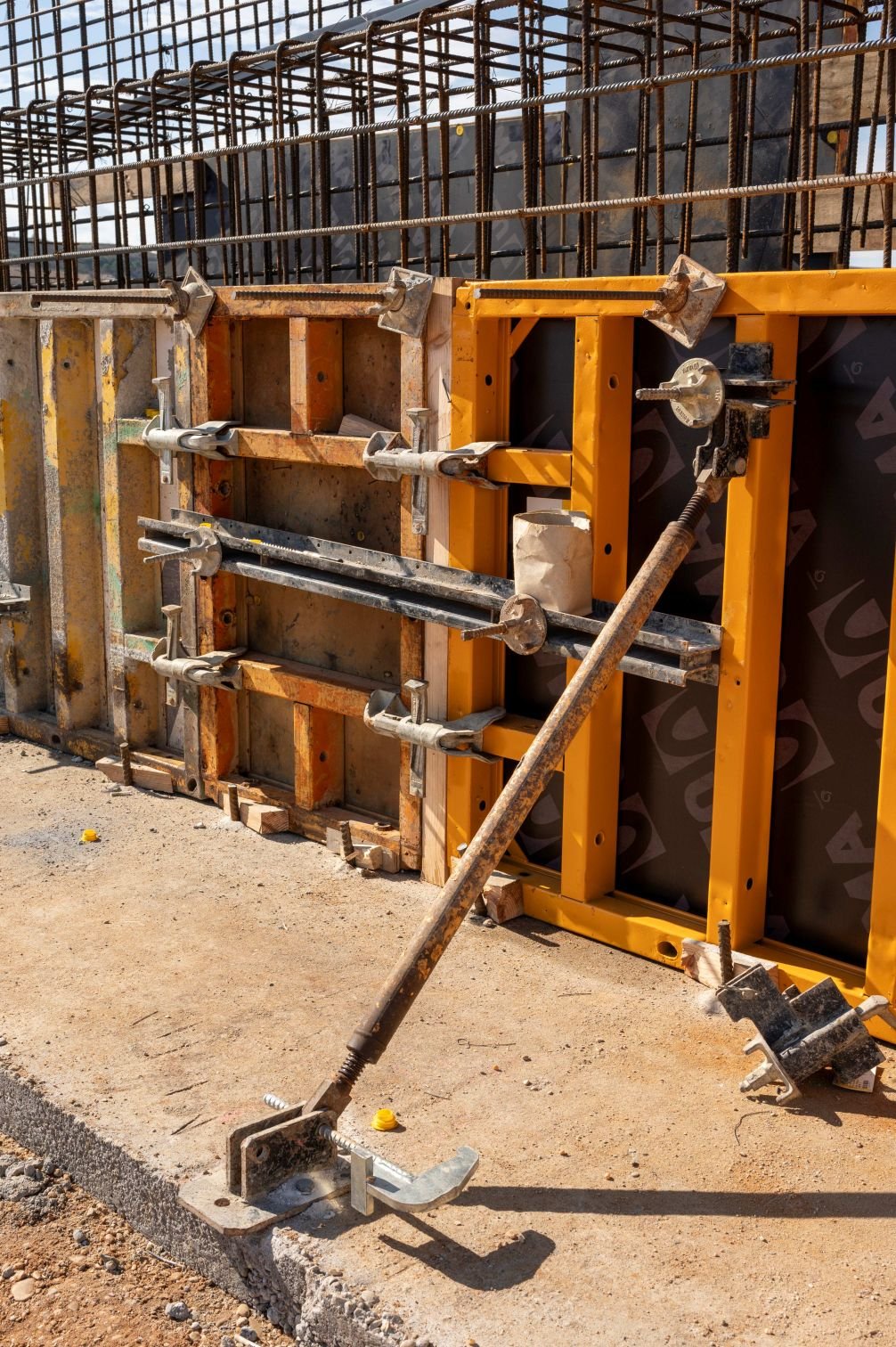
4. Why Bridges and Industrial Plants Demand Heavy-Duty Engineering
Standard residential formwork won't cut it when you move into heavy industrial infrastructure or bridge construction.
Take a standard bridge pier or a massive warehouse foundation. You are dealing with huge spans, extreme self-weight, and irregular geometries. To keep the concrete stable, you can't just slap some plywood together. You need precision-engineered steel formwork structurally synced with heavy-duty shoring towers to guarantee the system doesn't subside or shift an inch under load.
5. Safety Protocols That Prevent Jobsite Disasters
Formwork failure is one of the leading causes of fatal accidents in our industry. There are no shortcuts here.
The Pre-Pour Check
Before a single ready-mix truck backs up to the pump, a competent site safety officer needs to inspect the entire setup. Check the scaffolding couplers, look for bent shoring frames, and ensure the tie rods are torqued down. If a component looks rusted, warped, or compromised, pull it out.
Watch the Shoring During the Pour
Don't just watch the concrete fill the mold. Keep eyes on the shoring matrix underneath. Safety crews should actively check for shifting base jacks, loosening wedges, or wet grout leaking through the seams. If something starts bowing, hit the kill switch on the pour immediately.
When can you strip the formwork? When the concrete tells you it’s ready, not when your calendar says so. Dismantling supports prematurely triggers micro-cracking, structural deflection, or immediate collapse. Always base your stripping sequence on concrete compressive strength test cubes. And remember the golden rule: always dismantle in the exact reverse order of installation, leaving vertical shoring props in place as "backshorings" if the floors above are still undergoing heavy work.
Temporary vs. Permanent Formwork: Temporary formwork is struck, cleaned, oiled, and reused on the next project. Permanent formwork stays in place forever, becoming a functional part of the building's permanent insulation or structural reinforcement.
The Best Choice for High-Rises: Go with lightweight aluminum alloy systems. They allow for rapid 4-to-5-day cycle times per floor because your crew can strike them and carry them up to the next level by hand, keeping your project moving without waiting for the crane.
Need a Site-Ready Solution? At Yoshine Metal, we don’t just fabricate premium steel components; we solve on-site engineering problems. Backed by 16 years of main building construction experience, our team offers an integrated Drawing-to-Site service. Send us your blueprints, and our engineers will handle your rebar detailing, quantity takeoff, and full shoring configuration—bundling your steel, formwork support, and hardware into one single, site-ready cargo package.

Jinshi Museum, No.8 Qinling Rd, Qingdao China
Copyright © 2025 Qingdao Yoshine Metal Co., Ltd. All Rights Reserved.
Powered by HiCheng

